


At GTC 2026, Jensen Huang called the agentic AI inflection point arrived — and positioned OpenClaw as the operating system of agentic computers. Every enterprise, he argued, needs an OpenClaw strategy the way it once needed Linux, HTTP, or Kubernetes.
That is not a keynote sound bite. It is a distribution shift for software companies.
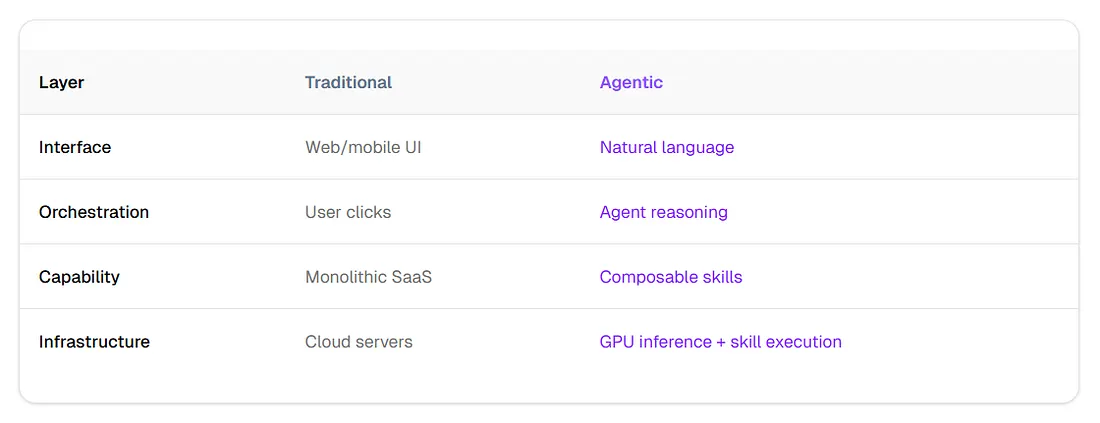
Quick answer: SaaS is converging on skills — packaged capabilities agents call over APIs — not dashboards humans visit. SaaS → Skills. Subscriptions → API calls. Interfaces → Agent orchestration. We just published ChartGen AI on ClawHub in three days; it is the most important product decision we made this year.
The Distribution Layer Moved
For twenty years, SaaS won by owning the interface. Sign up, log in, learn the product, export a PDF. Value lived behind a URL and a monthly subscription.
Agents do not want your UI. They want a capability they can invoke when a user says: "Chart last quarter's revenue by region and drop it in tomorrow's deck."
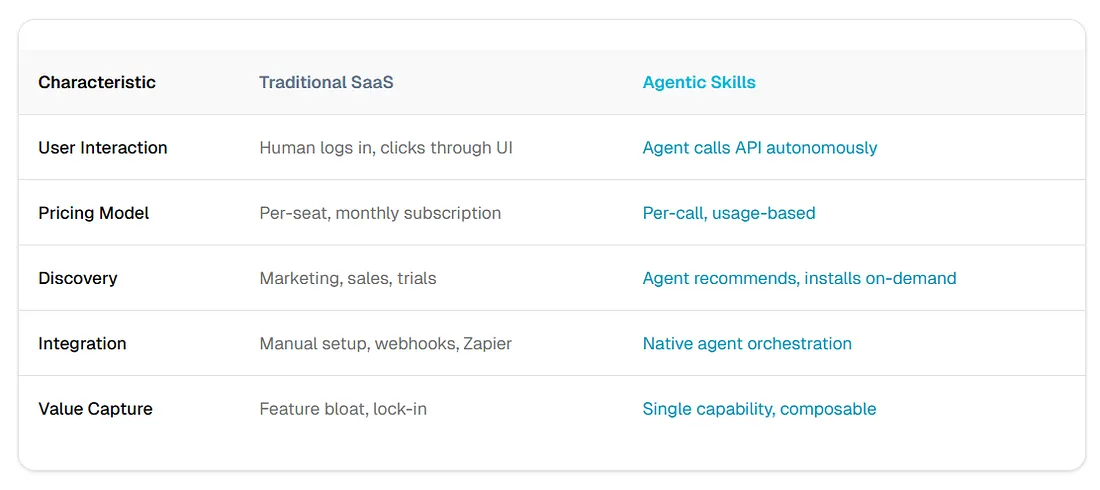
The winning products in 2026 are not necessarily the prettiest dashboards. They are the most callable, composable, and trustworthy skills in the agent's toolchain.
Three Forces Converging Right Now
1. Agent Capability
OpenClaw is not a chat wrapper. It is a full agent runtime: memory, skills, channels, cron, multi-step reasoning, and tool use. With 250K+ GitHub stars and thousands of community skills, it behaves less like an app and more like an OS where capabilities install the way packages once did on npm.
When agents can plan, call tools, and chain skills, every SaaS feature becomes a candidate skill.
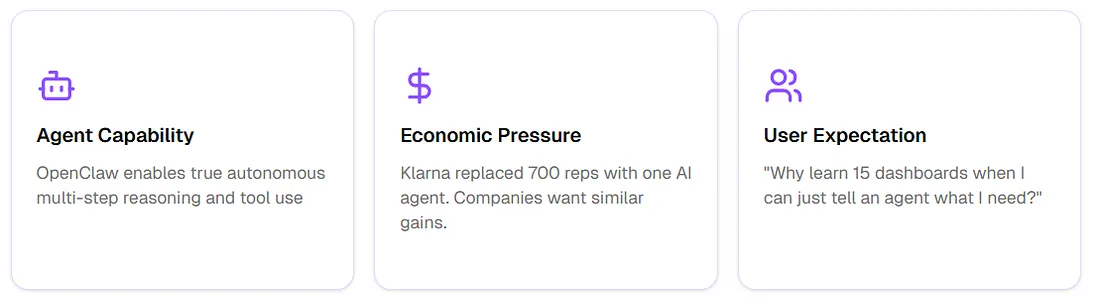
2. Economic Pressure
Boards still want the Klarna story: replace hundreds of repetitive workflows with one agent that never sleeps. Whether or not every headline ages well, the direction is set — labor-intensive software interfaces are under scrutiny.
Skills let you meter value at the capability level (API calls, credits, outcomes) instead of seat-based access to screens nobody opens.
3. User Expectation
People already ask agents instead of hunting through five tools. The expectation is shifting from "Where is the dashboard?" to "Handle it."
If your product is not reachable inside that loop, users still pay — but agents route around you.
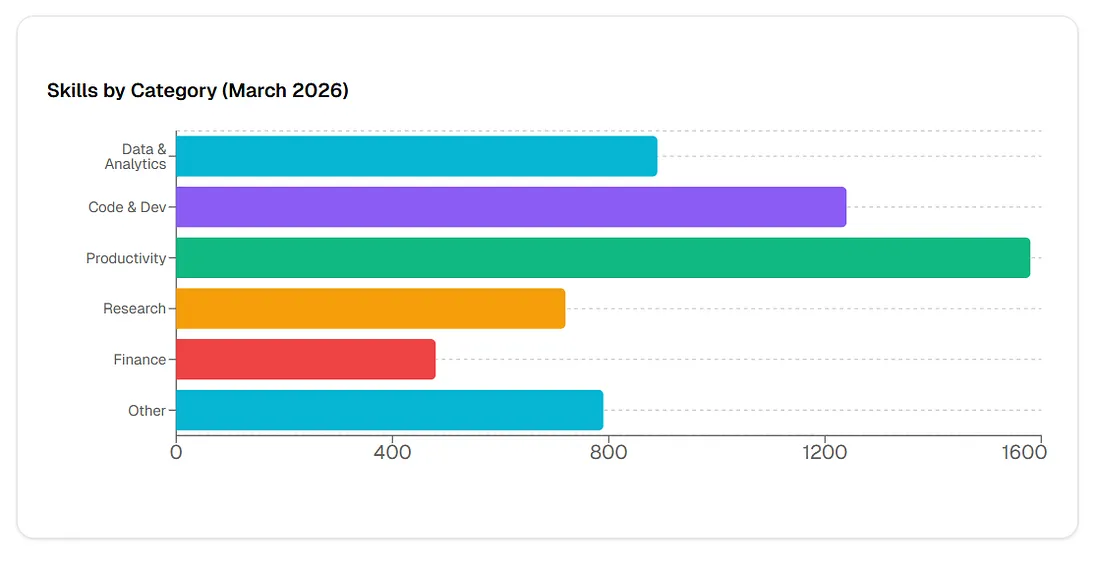
What a Skill Provider Actually Ships
A skill is not a shrunken web app. It is a contract:
- Inputs the agent can supply (files, JSON, prompts)
- Outputs the agent can chain (charts, summaries, files)
- Auth the operator configures once (
CHARTGEN_API_KEY) - Behavior documented so planners pick the right tool
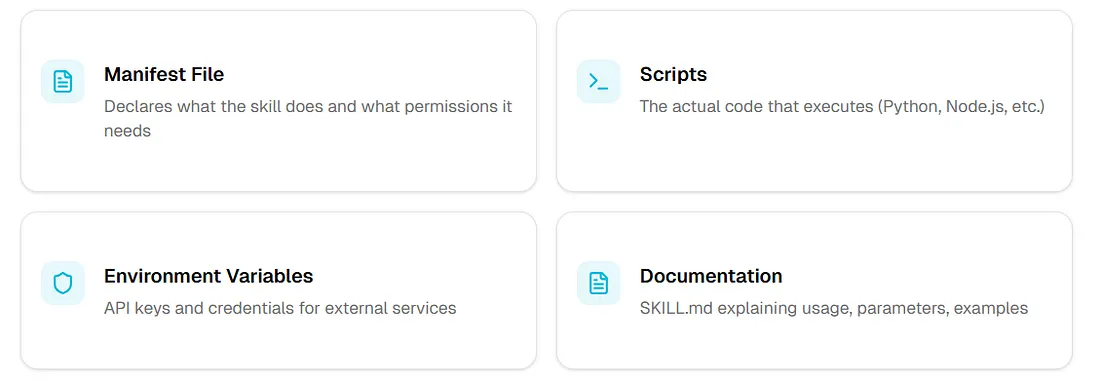
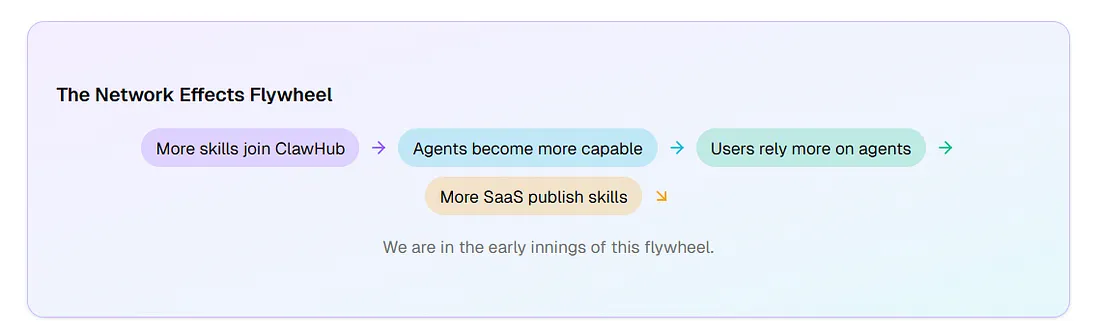
ClawHub is the official marketplace for OpenClaw skills — early npm energy for agent capabilities. Being present early matters: default skills become habits, and habits become renewals.
We Published ChartGen AI on ClawHub
Publishing ChartGen as a ClawHub skill took three days. Calling it our most important product decision this year is not exaggeration.
Why? Because our users increasingly live inside agent sessions. They should not context-switch to a separate browser tab to finish the chart for the report the agent is already writing.
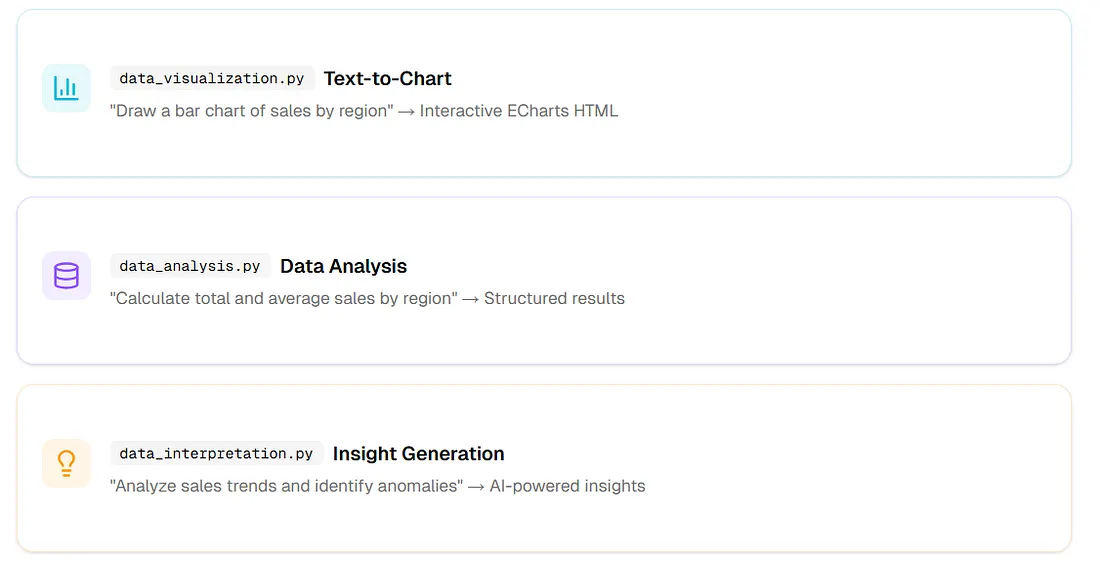
The skill exposes what ChartGen already does well — but on the agent's terms:
| Capability | What agents get |
|---|---|
| **Data visualization** | Text-to-chart from prompts; bar, line, pie, heatmap, combo, and more |
| **Data analysis** | Statistics, trends, filters on uploaded XLSX/CSV/JSON |
| **Data interpretation** | Insights, anomalies, and narrative recommendations |
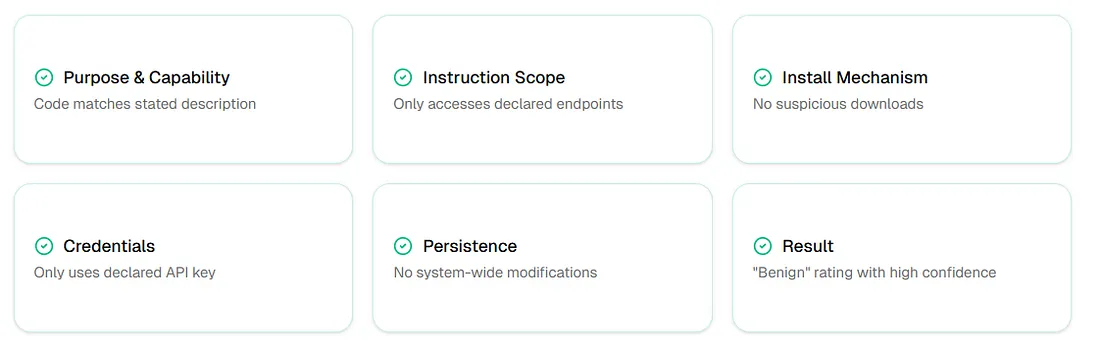
Security posture matters in marketplaces: ChartGen is listed with OpenClaw verification and benign security classification — agents are only useful if operators trust what they install.
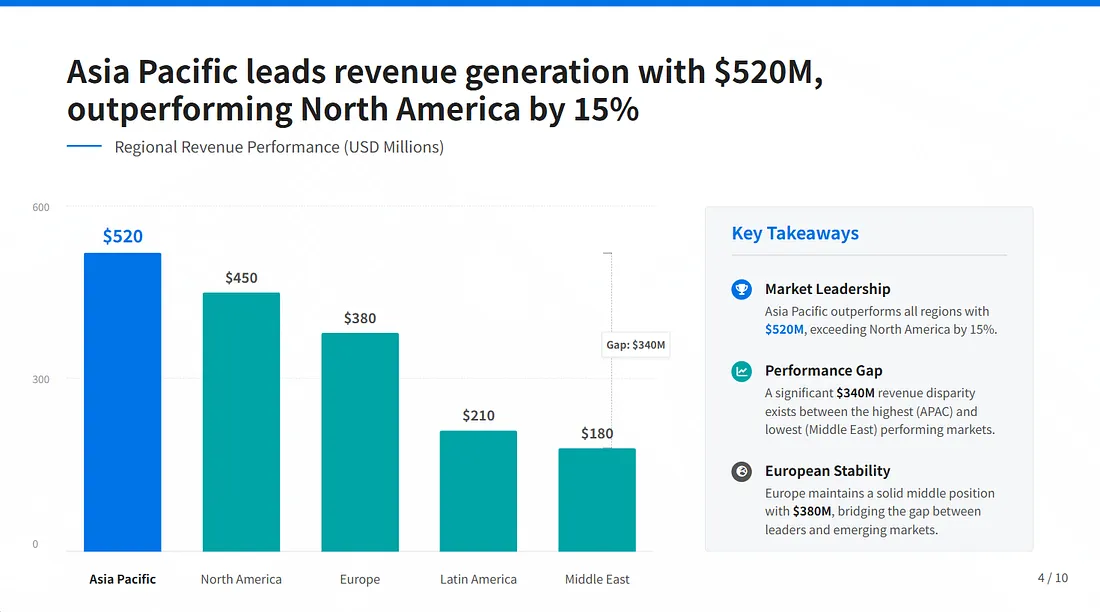
What Agents Produce With the Skill
Functional charts are table stakes. Presentation-ready output is the gap most agent stacks still miss.
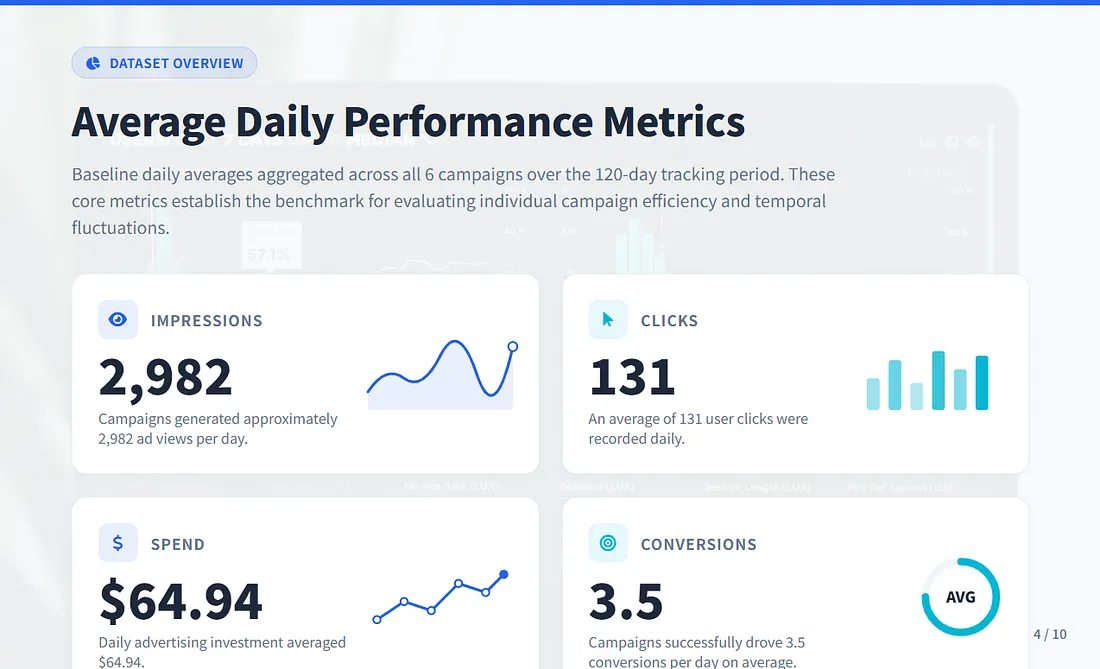
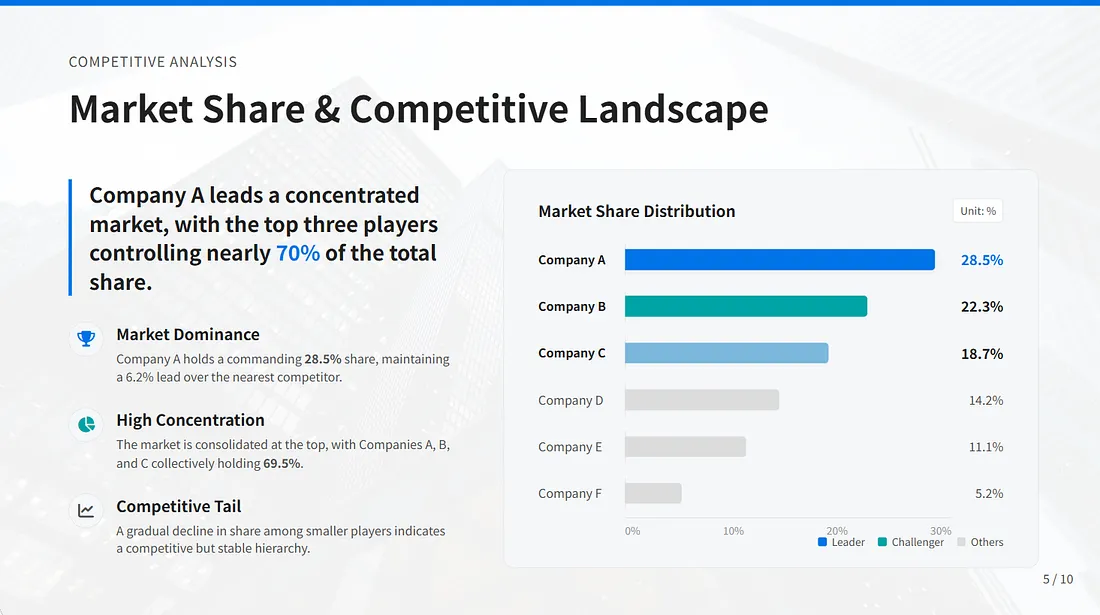
These are not screenshots of a web UI an agent cannot reach. They are outputs of a skill call — the format you want when the next step is Slack, PowerPoint, or a board email.
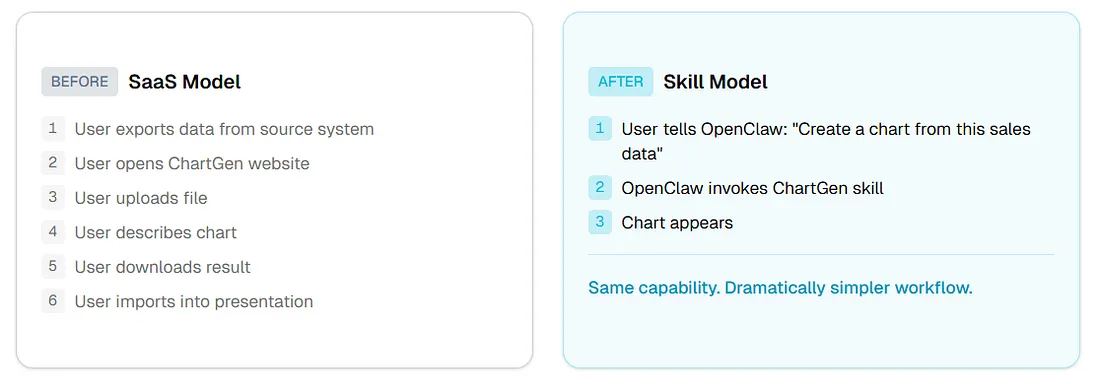
"The question is no longer 'Can we build another dashboard?' It is 'Can an agent call us at the right moment with the right data?'"
Install ChartGen on Your OpenClaw Agent
Register on ChartGen.ai
Create a free account at ChartGen AI and copy your API key. New users receive 200 free credits per month.
Configure the agent
Set the CHARTGEN_API_KEY environment variable in your OpenClaw agent configuration.
Run a first prompt
"Create a bar chart of monthly sales by region from the uploaded CSV."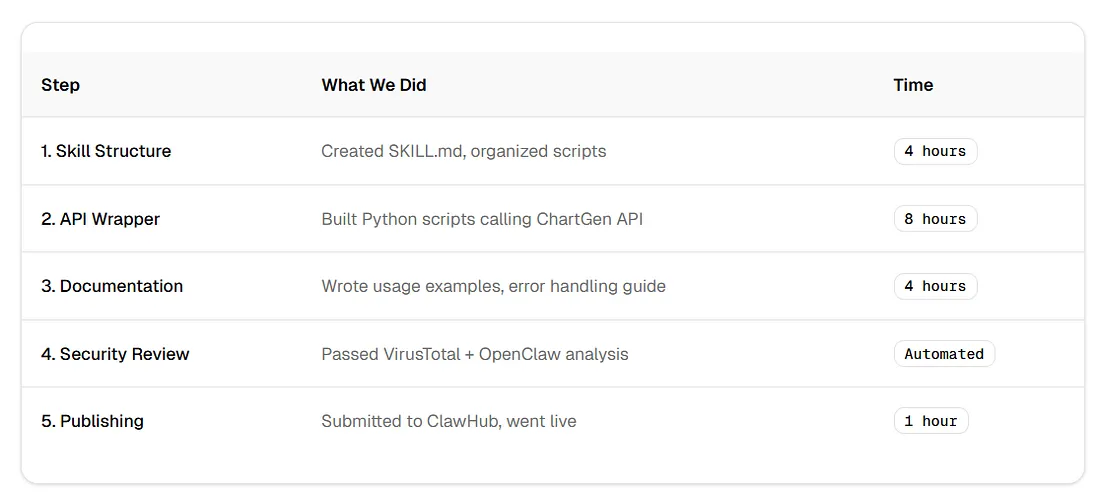
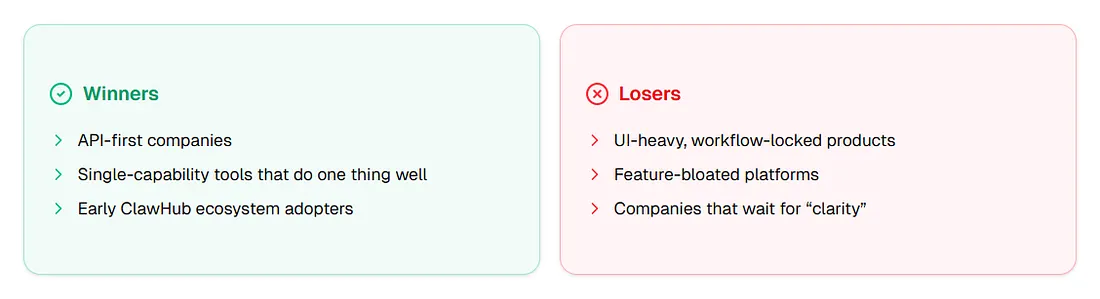
Who Wins the Skill Provider Race
Winners
- API-first products with clean auth and predictable outputs
- Vertical specialists agents reach for repeatedly (visualization, finance, compliance)
- Teams that ship skills early on ClawHub while discovery is still forming
Losers
- Interface-only SaaS with no machine-readable capability layer
- Seat-based pricing that does not map to agent call volume
- Products that require humans to finish the last mile agents promised to automate
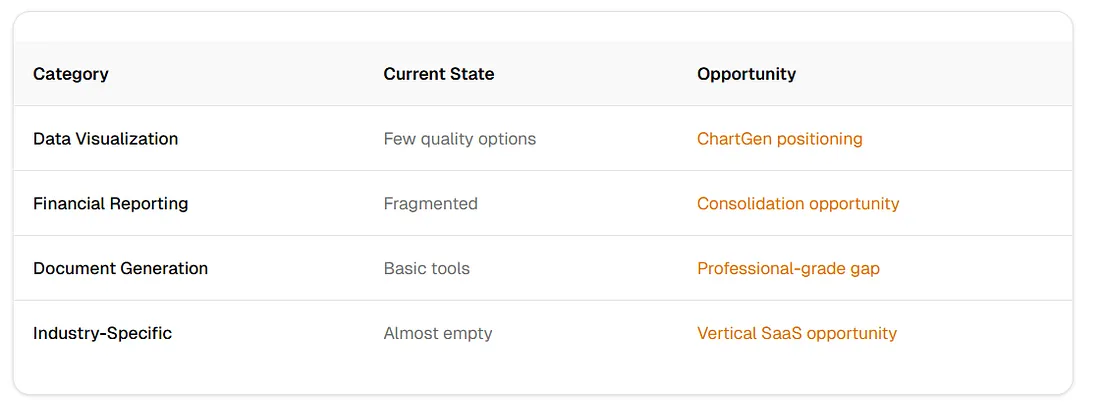
ChartGen sits in the specialist camp: agents already move data — we make the visual decision layer callable.
The Roadmap: SaaS UI + Skill Surface
We are not abandoning chartgen.ai. Humans still want a studio for exploration. But the growth vector is bi-modal:
- Studio for people refining slides and dashboards
- Skill for agents executing on a schedule or in chat

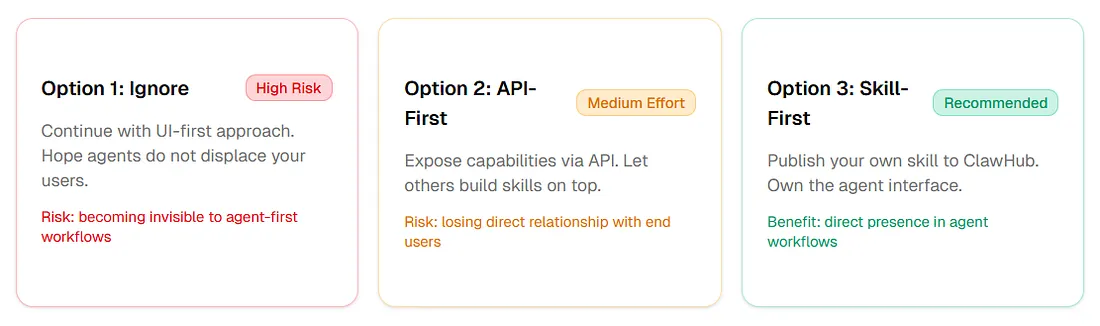
If you run a SaaS product today, ask: What is the one-sentence capability an agent would invoke? Ship that as a skill before a competitor becomes the default install.
Frequently Asked Questions
What is ClawHub?
ClawHub is the official skill marketplace for OpenClaw — similar to how npm distributes packages for Node.js. Skills extend what agents can do without custom integration code for every vendor.
How is a skill different from a SaaS API?
APIs are building blocks for developers. Skills bundle auth, prompts, tool schemas, and behavior so agents can select and run them autonomously. The buyer is increasingly the agent operator, not only the engineering team wiring REST calls.
Why publish ChartGen on ClawHub now?
OpenClaw momentum after GTC 2026 created a new distribution channel. Our users already automate reports with agents; meeting them inside that environment beats asking them to paste screenshots from a separate tab.
What file formats does the ChartGen skill support?
XLSX, CSV, and JSON uploads with automatic schema detection — aligned with the ChartGen OpenClaw skill documentation.
Do we still need the ChartGen web app?
Yes. Skills handle execution inside agents; the web app handles exploration, branding, and exports humans still touch. Long term, healthy SaaS companies offer both surfaces.
Conclusion: Become Callable or Become Bypassed
Huang's GTC framing was blunt: agentic computers need an OS, and OpenClaw is filling that role in the open-source world. SaaS companies that only sell logins will feel increasing friction.
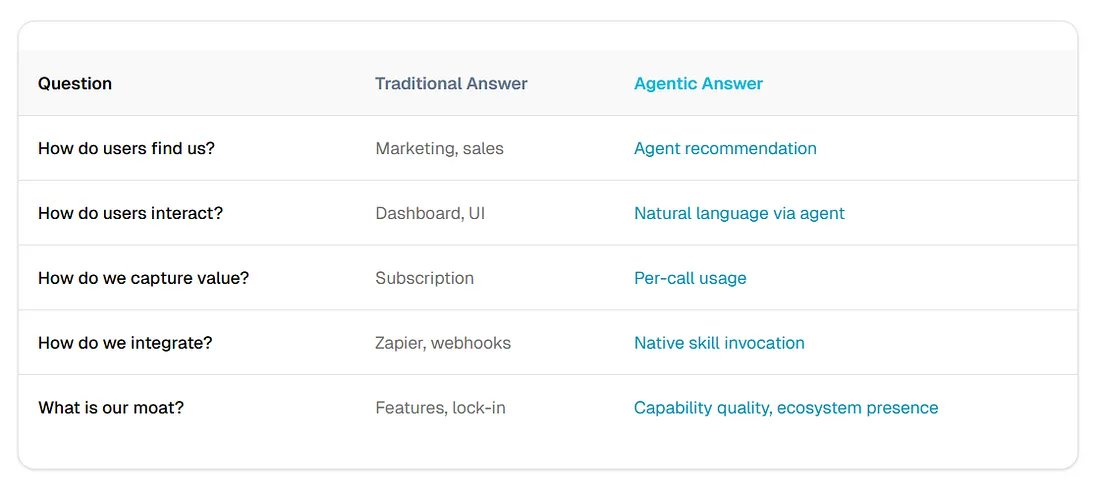
SaaS → Skills. Subscriptions → API calls. Interfaces → Agent orchestration.
We shipped ChartGen on ClawHub in three days because the cost of waiting — lost agent workflows, lost defaults, lost trust in the marketplace — exceeded the cost of packaging what we already built.
If you are sitting on a SaaS product with a solid API, your next milestone may not be a redesign. It is a skill.
Key Takeaways
- GTC 2026 cemented agents as a distribution channel, not only a feature inside existing apps.
- Three forces — capability, economics, and expectations — push SaaS toward skill providers.
- ClawHub is the early marketplace layer; presence there is positioning, not a side project.
- ChartGen AI on ClawHub packages visualization, analysis, and interpretation for agent runtimes.
- Winners ship callable, trusted capabilities; losers cling to interfaces agents never open.