



For years, we have described AI as a tool.
A writing assistant. A coding assistant. A design assistant. A chatbot.
The language reveals the mindset: AI waits. Humans decide.
But something subtle has shifted.
In 2026, AI is no longer just responding. It is beginning to initiate.
And that changes everything.
From prompts to processes
The first generation of mainstream AI was prompt-driven.
You ask. It answers.
The interaction was transactional.
But businesses do not run on prompts. They run on processes.
Hiring is not a question. It is a workflow.
Marketing is not a response. It is a system.
Financial planning is not a single chart. It is a recurring cycle of monitoring, analysis, and adjustment.
What is emerging now is AI that does not only answer questions — it executes workflows.
It plans steps. It retrieves data. It evaluates outcomes. It loops back.
In other words, AI is moving from reactive to operational.
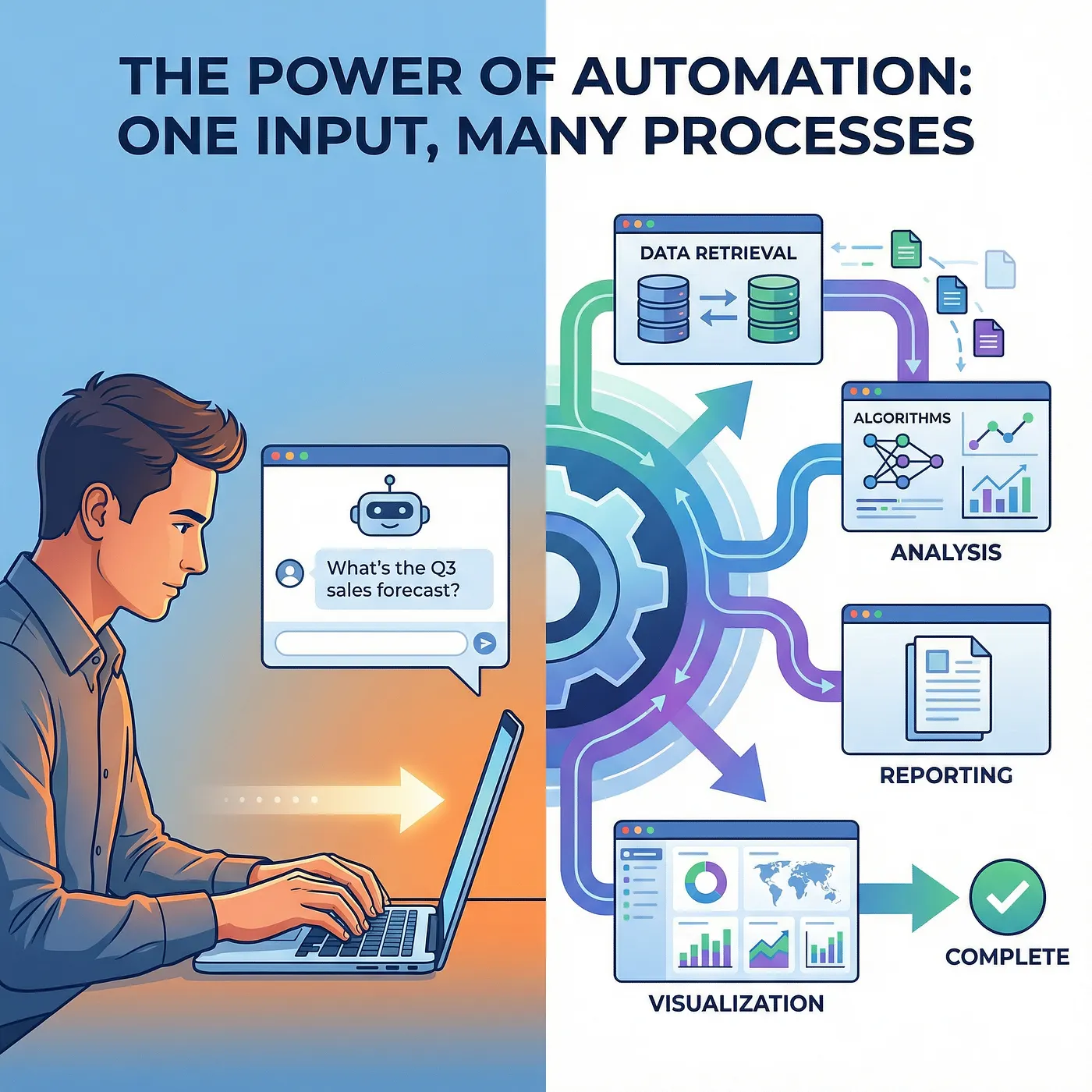
The shift is subtle: we are moving from asking AI questions to assigning it responsibilities.
The rise of autonomous workflows
We are entering the era of what many now call agentic AI.
These systems do not just generate outputs. They:
- Break down goals into sub-tasks
- Gather necessary information
- Perform sequential actions
- Adjust based on intermediate results
Instead of asking:
“What were our sales last week?”
Organizations are increasingly asking:
“Monitor regional performance daily and alert me when something unusual happens.”
The difference is subtle but profound.
One is a query. The other is delegation.
AI is no longer only a calculator. It is a junior operator.

Agentic systems do not only generate answers — they coordinate actions.
Why this shift matters more than better models
For the past few years, most headlines focused on benchmarks:
- Which model writes better?
- Which model reasons better?
- Which model scores higher?
But the real revolution is not only quality. It is autonomy.
When AI starts handling multi-step tasks without constant supervision, the economics of work begin to shift.
Consider this:
A single prompt saves minutes. A delegated workflow saves hours. An automated system saves entire layers of coordination.
This is not about replacing people. It is about compressing execution cycles.
And in competitive markets, execution speed is advantage.
The quiet rewiring of organizations
Autonomous AI does not simply speed up tasks. It changes how organizations are structured.
Traditionally, information flows like this:
- Question raised
- Task assigned
- Data gathered
- Report prepared
- Meeting scheduled
- Decision made
Each step introduces delay. Each handoff introduces interpretation.
Agentic AI collapses layers.
Monitoring becomes continuous. Reporting becomes automatic. Alerting becomes proactive.
Instead of reacting weekly, teams respond instantly.
Over time, this reduces coordination overhead — and increases the importance of judgment.
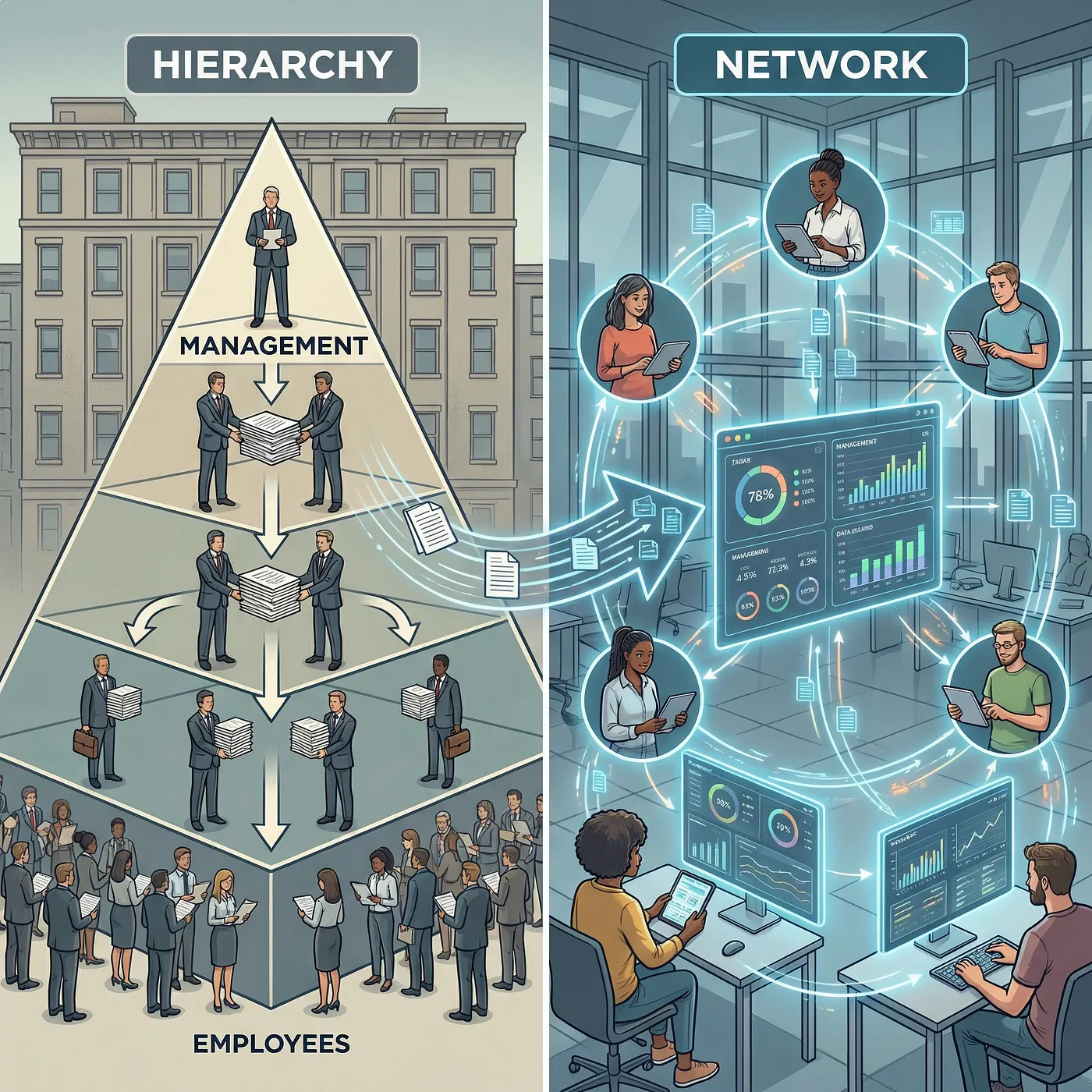
When reporting becomes automatic, organizations reorganize around decisions instead of processes.
The human role does not disappear — it moves
Whenever AI evolves, the same anxiety resurfaces: “Will this replace us?”
History suggests a different pattern.
When automation entered factories, humans shifted to oversight. When spreadsheets replaced ledgers, accountants shifted to analysis. When search engines arrived, researchers shifted to synthesis.
Autonomous AI reduces mechanical effort. It increases cognitive responsibility.
Humans move from:
Doing → Designing
Executing → Evaluating
Gathering → Interpreting
The work does not vanish. It elevates.

As automation expands, human work shifts upward toward judgment and interpretation.
The risk: delegation without understanding
There is, however, a danger.
As AI systems become more autonomous, users may become less attentive.
Delegation without comprehension leads to blind trust. Blind trust leads to systemic risk.
Autonomous workflows require transparent reasoning. Traceable steps. Clear audit trails.
The future of AI is not only about intelligence — it is about accountability.
The organizations that succeed will not be those that automate everything. They will be those that design automation thoughtfully.
From tool to teammate
We once described AI as a tool in our hands.
But tools do not monitor performance. Tools do not suggest next actions. Tools do not adapt to changing conditions.
Teammates do.
2026 may be remembered as the year AI crossed that line.
Not because it became conscious. Not because it became perfect.
But because it became operational.
The shift from assistant to actor is subtle.
But once it happens, work never looks the same again.

The future of AI collaboration is not control, but partnership.