


For the past two years, a lot of the public conversation about AI has boiled down to one question: How good is this model at answering questions?
Benchmarks. Leaderboards. Reasoning scores. Hallucination rates.
That question is slowly becoming the wrong one—because the more interesting shift is not how well models talk, but whether they can work on the same artifacts teams already use.
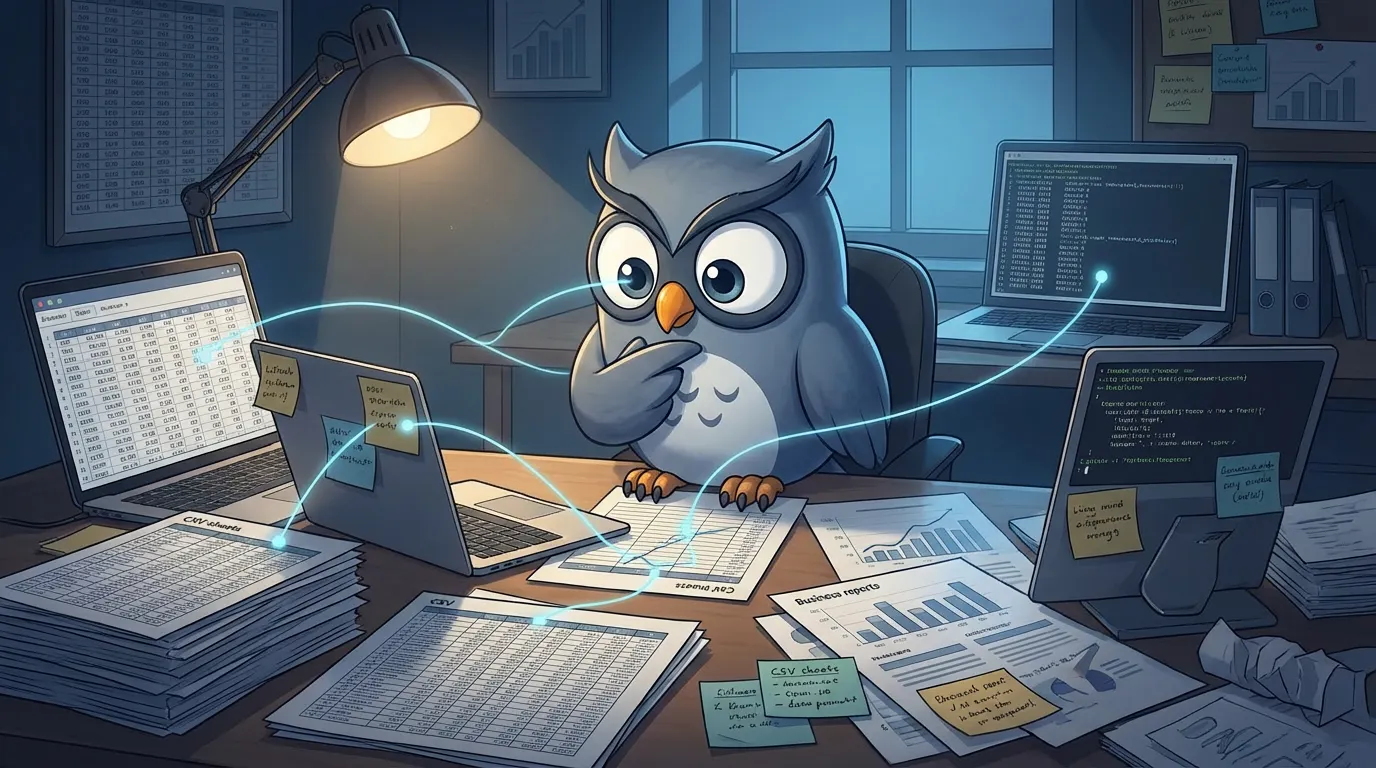
So we ran a simple experiment. Instead of puzzles, riddles, or synthetic prompts, we gave an AI something closer to real life: data.
The setup: analyst, not chatbot
The idea was straightforward: treat the system like an analyst, not a chatbot.
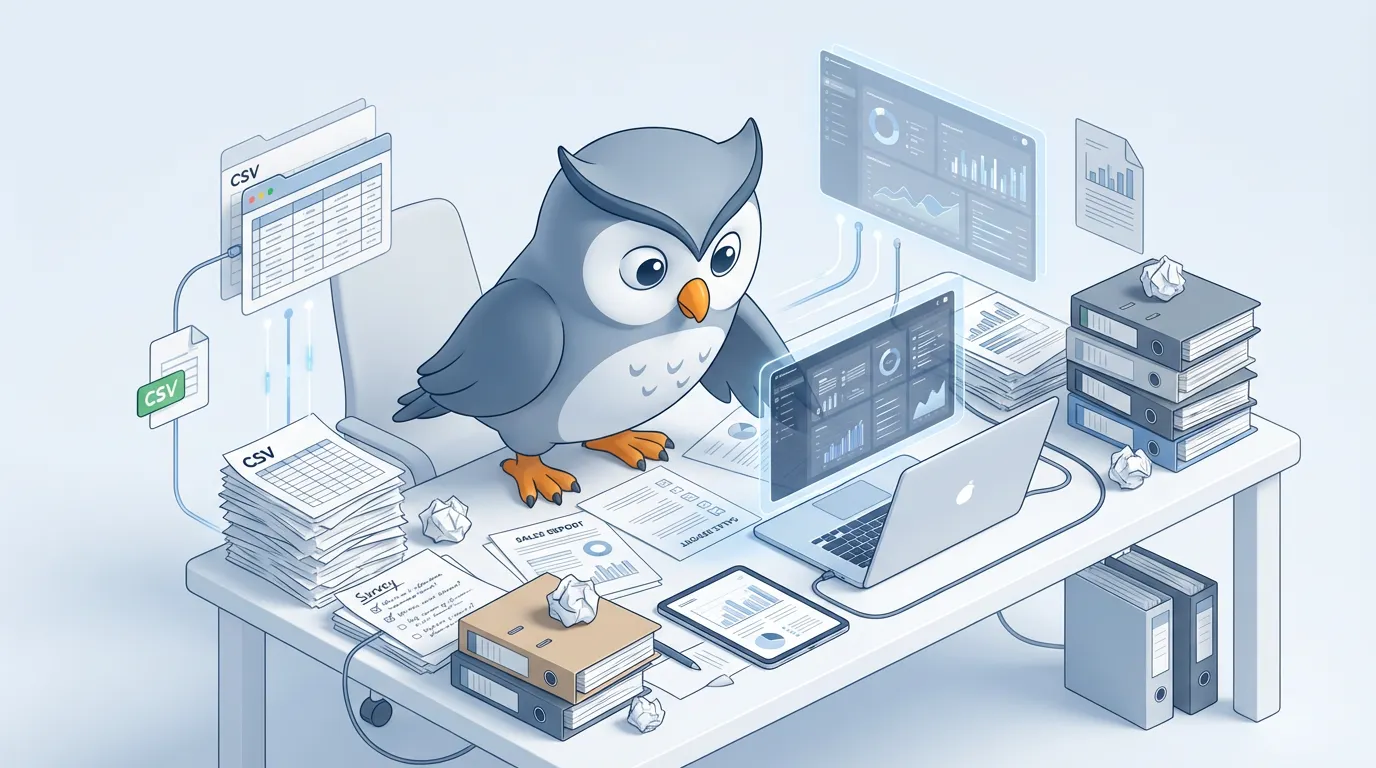
We collected 20 datasets from ordinary business-style situations—weekly sales, campaign results, churn tables, survey exports, inventory logs, product metrics. No special formatting. No curated benchmark pack. Just the kind of messy tables people email each other every day.
Then we asked for something harder than a summary:
“Tell us what matters here.”
Not “describe the columns.” Analyze.
The goal was to see whether AI could move past conversational assistance and behave like someone trying to reach a conclusion.
What we expected
We assumed three outcomes:
- It would produce charts
- It would narrate trends
- It would occasionally hallucinate
It did all three. But the outcome that changed how we think about the category was different.
Surprise 1: it did not start with visualization
Human analysts often follow a familiar path: open a spreadsheet, clean, chart, then interpret.
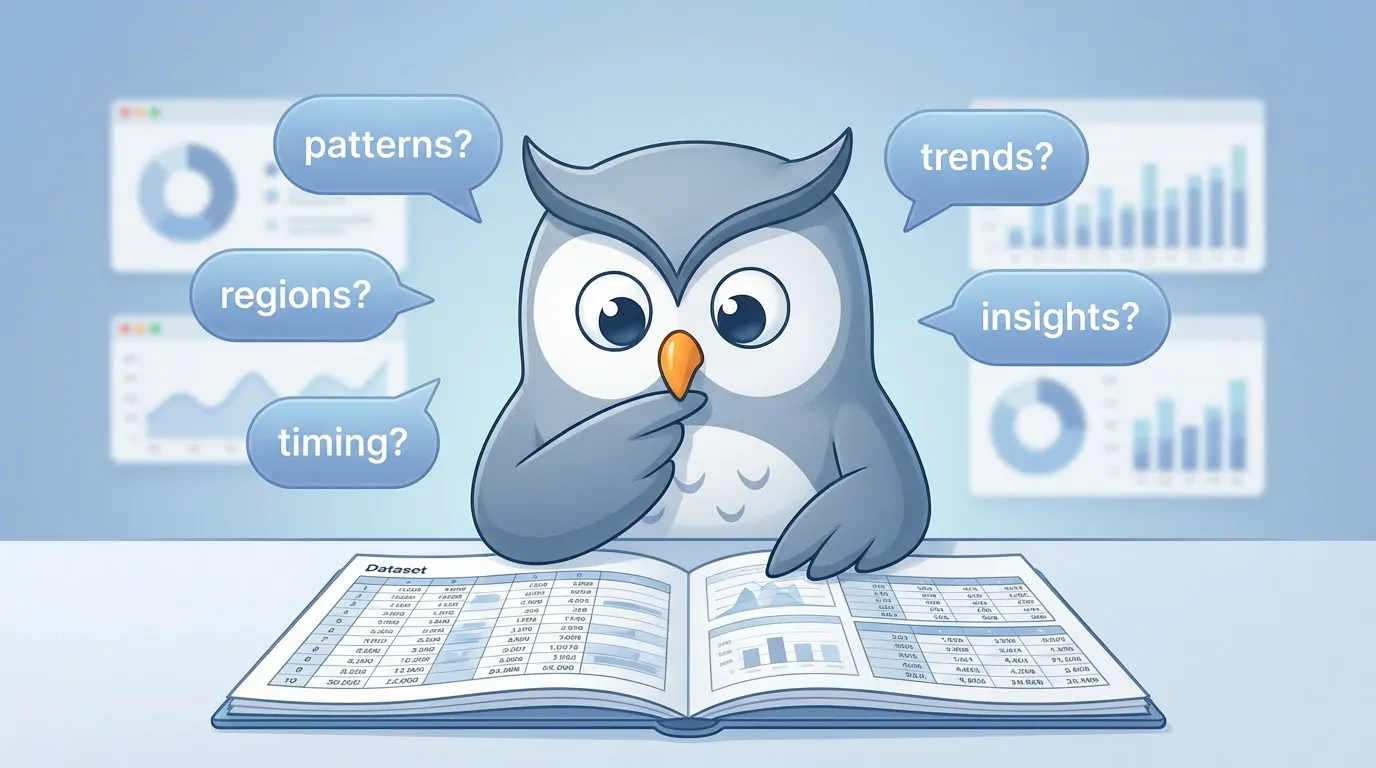
The system did not reliably mirror that order. It started by surfacing uncertainty—questions about seasonality, comparability across regions, pricing changes during the window, and other context gaps that determine whether a chart would even be honest.
That behavior lines up with what many teams now call data agents: systems that can carry more than one step of the analytical workflow, not just answer a single prompt.
In other words, it was not only drawing. It was forming hypotheses.
Surprise 2: the charts were not the most valuable output
We expected charts to be the headline benefit. They were not.
The highest-leverage moments came when the system explained why a number moved.
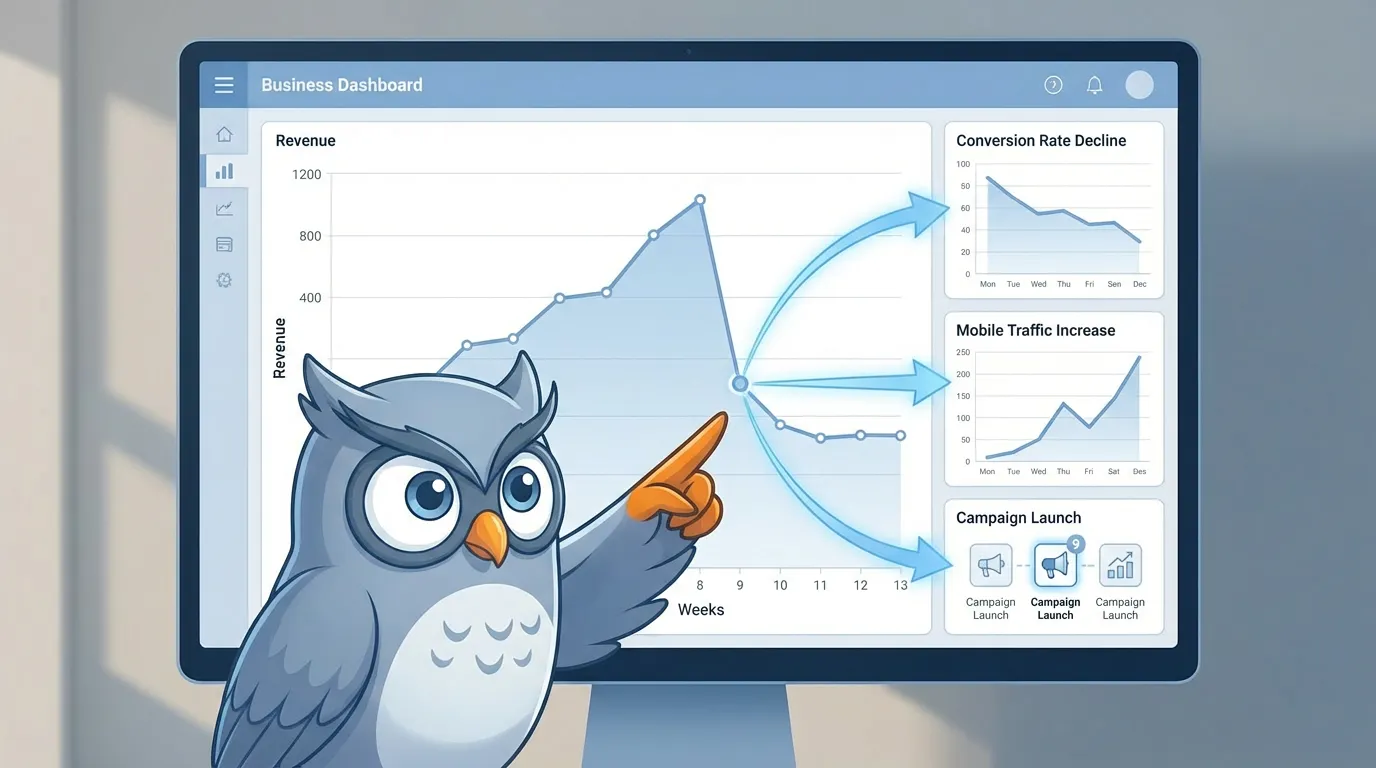
Example from a retail-style file: a revenue dip in one week. A human might stop at “something dropped.” The run linked the dip to falling conversion, a spike in mobile traffic, and a specific campaign launch—then produced a compact explanation: low-intent visitors diluted conversion after the campaign pulled in broader traffic.
That is not magic prediction. It is reasoning across signals—and it reframed what “AI analytics” should optimize for.
Surprise 3: speed changed behavior, not just throughput
Classic analytics workflows inherit friction: request, queue, analysis, meeting, decision.
When answers land in seconds instead of days, people do not only move faster—they ask more questions. Smaller, sharper ones:
- “What changed yesterday?”
- “Why did Region B beat Region A?”
- “What happens if weekends are excluded?”
The bottleneck was rarely raw data volume. It was the cost of asking. Once that cost collapses, curiosity—and iteration—goes up. That changes how teams relate to data altogether.

From assistant to analyst
Chatbots help you write. Search helps you find. Analytical systems should help you decide.
Companies are already experimenting with more autonomous systems that coordinate operational data and workflows. What we saw at smaller scale was the same directional shift: AI moving from responding to interpreting to guiding attention.
Instead of: “Here is the chart you asked for.”
It becomes: “Here is what deserves scrutiny—and why.”
The real implication
For years, BI culture leaned hard on dashboards. Dashboards assume users already know what to look for, which view matters, and how to read a change.
Most teams do not fail because they cannot access data. They fail because understanding is expensive.
The industry problem was never visualization alone. It was cognition under time pressure.
What this means for work
The common fear is replacement. The experiment pointed somewhere narrower.
The AI did not erase the analyst role. It replaced waiting, repetitive chart assembly, and the first pass of mechanical comparison.
What remained on the human side:
- Judgment
- Decision-making
- Communication
- Context only a stakeholder can supply
The job did not vanish. It moved upstack.
A different category of tool
We are early in a shift toward what you might call thinking infrastructure—software that surfaces patterns, explains anomalies, directs attention, and shortens the path from data to action.
The next generation of analytics will not be defined by the prettiest default chart.
It will be defined by how quickly a team can move:
data → understanding → action

Closing frame
For a long time, we graded AI by whether it could answer like a human.
After runs like this, a better test is simpler:
Does it help humans understand faster—and with enough traceability to trust the next step?
Because the durable revolution is not machines that sound smart.
It is machines that make people more decisive.
That transition is already underway—quietly, in the spreadsheets and exports teams already have.